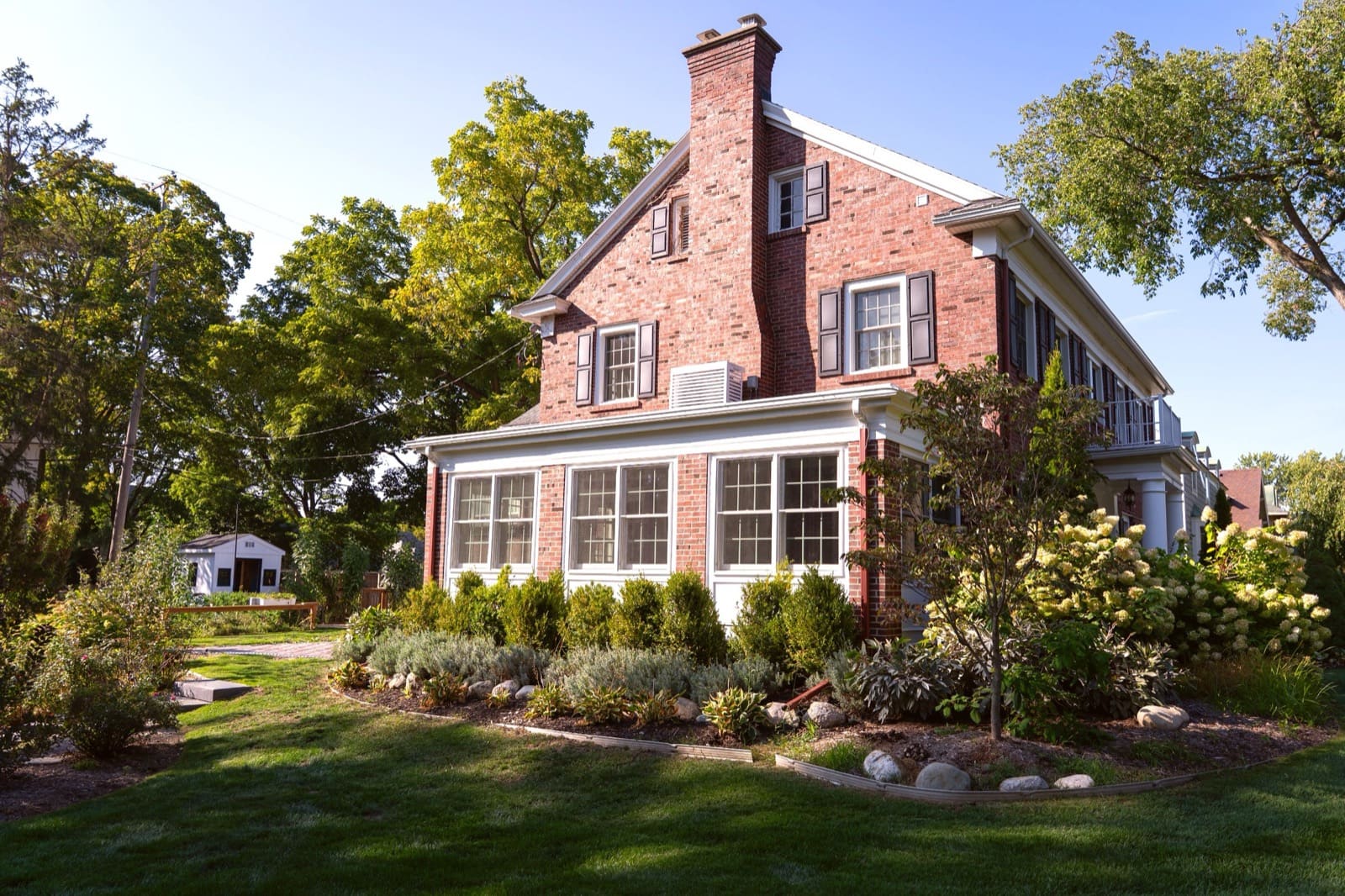
A home addition in Grand Rapids typically costs between $150 and $400+ per square foot depending on the type of addition, the complexity of the build, and the level of finish. For most homeowners in West Michigan, that translates to a range of $30,000 for a compact three-season sunroom to well over $300,000 for a full second-story addition with high-end finishes. The spread is wide because no two additions are alike. A sunroom on a slab is a fundamentally different project than a second-story master suite that requires structural reinforcement from the foundation up.
This guide breaks down the real costs of every major type of home addition based on our 2025-2026 Grand Rapids area projects. We will cover what drives the price, how local factors affect your budget, and how to plan your investment so there are no surprises along the way. Whether you need an extra bedroom for a growing family or a full in-law suite, you will leave with a clear understanding of what your project is likely to cost.
Home Addition Costs by Type
The type of addition you build is the single biggest factor in determining your total cost. Here is a breakdown of the most common addition types we build in the Grand Rapids area, based on our recent project data:
| Addition Type | Typical Size | Cost Range | Timeline |
|---|---|---|---|
| Single room addition | 150-400 sq ft | $30,000 - $120,000 | 8-14 weeks |
| Second story | 400-1,200 sq ft | $100,000 - $300,000+ | 16-24 weeks |
| Sunroom (3-season) | 150-300 sq ft | $30,000 - $60,000 | 6-10 weeks |
| Sunroom (4-season) | 150-300 sq ft | $50,000 - $100,000 | 8-14 weeks |
| In-law suite / ADU | 400-800 sq ft | $80,000 - $200,000+ | 14-24 weeks |
| Master suite | 300-600 sq ft | $80,000 - $180,000 | 12-20 weeks |
These ranges reflect mid-grade to upper-mid-grade finishes, which is where most of our Grand Rapids clients land. Premium finishes, complex rooflines, or challenging site conditions can push costs above the upper end of these ranges.
Single Room Additions
A single room addition is a ground-level expansion that adds one room to the home, such as a family room, bedroom, or home office. These projects require a new foundation, exterior walls, roofing, and integration with the existing home's systems. At 150 to 400 square feet, this is the workhorse of the addition world. The cost range of $30,000 to $120,000 reflects the wide variation in size, complexity, and finish level. A simple 12-by-14 bedroom addition on a slab sits at the lower end. A 20-by-20 great room with vaulted ceilings, large windows, and premium finishes reaches toward the upper end.
Second-Story Additions
Adding a second story is one of the most transformative projects a homeowner can undertake, but it is also one of the most complex. The existing foundation and first-floor framing must be evaluated and often reinforced to carry the additional load. The entire roof is removed and rebuilt. Plumbing, electrical, and HVAC systems need to be extended vertically. During construction, the first floor of the home is exposed to weather, which requires careful planning and temporary protection. The $100,000 to $300,000+ range reflects projects from a modest two-bedroom addition over an existing ranch to a full second story that doubles the home's living space.
Sunrooms
The cost difference between a three-season and four-season sunroom comes down to insulation, glazing, and HVAC. A three-season sunroom uses single-pane or lightly insulated glass and does not require heating or cooling, which keeps costs in the $30,000 to $60,000 range. A four-season sunroom is built to the same thermal standards as the rest of the home, with insulated walls, double or triple-pane low-E glass, and a dedicated heating and cooling connection. That added performance pushes costs to $50,000 to $100,000 but gives you a room that is comfortable year-round, which matters significantly in a Michigan climate.
In-Law Suites and ADUs
In-law suites and accessory dwelling units are essentially self-contained living spaces with a bedroom, bathroom, kitchenette, and separate entrance. These are among the most expensive additions per square foot because they pack all the systems of a small home into a compact footprint. Every trade is involved: foundation, framing, roofing, plumbing, electrical, HVAC, insulation, drywall, flooring, cabinetry, and appliances. Demand for these units has grown significantly in the Grand Rapids area as multigenerational living becomes more common. If you are considering an ADU build, expect to invest $80,000 to $200,000+ depending on size and finish level.
Master Suite Additions
A master suite addition combines a spacious bedroom with a full bathroom and typically includes a walk-in closet. At 300 to 600 square feet, these projects demand careful design to integrate with the existing home's flow and aesthetic. The bathroom component drives a significant portion of the cost because it requires plumbing rough-in, tile work, fixtures, ventilation, and waterproofing. A well-designed master suite addition is one of the most satisfying projects we build because it directly improves how homeowners live every single day.
What Drives the Cost of a Home Addition?
Understanding the individual cost drivers helps you make informed decisions about where to invest and where to pull back. Here are the major factors:
Foundation Type
The foundation is the first major cost decision. A concrete slab is the simplest and most cost-effective option, typically adding $8,000 to $20,000 depending on size. A crawl space foundation runs $12,000 to $30,000 and provides access to plumbing and utilities below the addition. A full basement foundation is the most expensive at $25,000 to $60,000+ but gives you additional finished or storage space below the new room. In the Grand Rapids area, soil conditions vary from neighborhood to neighborhood. Sandy soils in areas like Cascade and Ada generally mean straightforward excavation, while clay-heavy soils in parts of Wyoming and Kentwood may require additional drainage work.
Roofline Integration
How the new roof ties into the existing roof has a significant impact on both cost and appearance. A simple shed roof that slopes away from the existing wall is the most cost-effective approach. A gable roof that matches the existing roofline looks better but requires more complex framing and flashing. If your addition changes the existing roofline, for example by extending a hip roof or adding a dormer, expect the roofing and framing costs to increase substantially. On many West Michigan homes built in the 1950s through 1980s, the existing roof pitch and overhang style create specific constraints that our design team works through before construction begins.
HVAC Extensions
Your existing furnace and air conditioning system may or may not have the capacity to serve additional square footage. If your current system can handle the load, extending ductwork to the new space typically costs $2,000 to $5,000. If the system needs to be upsized or a supplemental system installed, plan for $5,000 to $15,000. Ductless mini-split systems have become a popular option for additions because they provide independent heating and cooling without requiring ductwork. A single-zone mini-split typically costs $3,500 to $6,000 installed and is an efficient solution for sunrooms, in-law suites, and rooms that are far from the main trunk line.
Plumbing and Electrical
Additions that include bathrooms, kitchens, or kitchenettes require plumbing rough-in, which typically adds $5,000 to $15,000 depending on the distance from existing supply and drain lines. Electrical work for a standard room addition runs $2,000 to $5,000 for outlets, switches, and lighting circuits. More complex electrical needs, such as a subpanel for a large addition, dedicated circuits for a kitchenette, or extensive recessed lighting, can push electrical costs to $5,000 to $10,000. Older Grand Rapids homes, particularly in neighborhoods like Heritage Hill, Eastown, and Alger Heights, may require electrical panel upgrades to support the additional load.
Finish Level
Interior finishes account for a substantial portion of the total cost and offer the widest range of options. Standard finishes, including builder-grade flooring, basic trim, painted drywall, and simple lighting fixtures, keep costs at the lower end of the ranges listed above. Mid-grade finishes such as engineered hardwood, crown molding, upgraded lighting, and quality paint add 15% to 25% to the interior finish budget. Premium finishes including solid hardwood, custom millwork, designer fixtures, and specialty wall treatments can double the finish costs compared to standard selections.
Permits and Engineering
Every home addition in Grand Rapids requires building permits and most require structural engineering. Permit fees in the metro area typically total $1,500 to $4,000 across building, electrical, plumbing, and mechanical permits. Structural engineering for the design of footings, headers, beams, and connections typically costs $1,500 to $4,000 for a standard addition and more for second-story work or complex structural conditions. These costs are non-negotiable and are included in our project pricing.
Site Access and Conditions
The physical conditions of your property affect construction costs more than most homeowners realize. A flat, open backyard with easy equipment access is the ideal scenario. Sloped lots, tight side yards, mature trees near the build area, overhead power lines, or the need to work over existing landscaping all add time and cost. If heavy equipment cannot reach the work area, materials must be carried in by hand, which increases labor hours significantly.
Home Addition Costs in Grand Rapids, Michigan
The Grand Rapids metro area has specific factors that influence home addition costs compared to national averages. Understanding these helps you set realistic expectations.
Local Labor Market
West Michigan has a strong trades workforce rooted in the region's manufacturing heritage, and skilled labor rates here are competitive compared to major coastal metros. However, demand for residential construction in the Grand Rapids area has been strong for several years, and experienced crews are in high demand. Skilled carpenter rates in the area run $45 to $75 per hour. Electricians and plumbers charge $65 to $95 per hour. These rates are reflected in the project costs listed throughout this guide.
Seasonal Considerations
Michigan's seasons have a real impact on home addition scheduling and cost. Spring and summer are peak construction season, and contractors are at their busiest from April through October. Starting your project during this window means potential competition for crews and materials. Fall and early winter can offer better scheduling availability, but any project that involves foundation work needs to account for frost depth. In Kent County, the frost line sits at 42 inches, and concrete cannot be poured in freezing conditions without costly protective measures. If you are planning a spring start, getting through the design and permitting process during winter puts you first in line when the ground thaws.
Grand Rapids Permit Process
The City of Grand Rapids Building Inspections department processes residential addition permits, and the timeline has varied from two to six weeks in recent years depending on volume and the complexity of your submission. Surrounding townships, including Ada, Cascade, and Byron Center, each have their own building departments with slightly different processes and fee structures. A complete permit application includes architectural drawings, structural engineering, a site plan showing setbacks, and in some cases energy compliance documentation. Our team handles the entire permit process as part of the project, which eliminates one of the most common sources of delays for homeowners trying to manage their own builds.
Zoning and Setback Requirements
Kent County and the various municipalities within it enforce setback requirements that determine how close your addition can be to property lines. Typical residential setbacks in Grand Rapids are 25 feet from the front property line, 5 to 10 feet from side lines, and 25 to 35 feet from the rear line, though these vary by zoning district. A variance may be required if your addition encroaches on a setback, which adds time and cost to the approval process. We review zoning requirements during the initial design phase so there are no surprises after design work is complete.
How to Budget for a Home Addition
Proper budgeting is the difference between a project that feels like a smart investment and one that becomes a financial burden. Here is how to approach it:
The Design-Build Advantage
In a traditional design-bid-build process, you hire an architect to draw plans, then send those plans out for bids from multiple contractors. This approach creates a gap between what is designed and what is priced, often leading to redesigns or cost surprises. A design-build approach, where the same firm handles both design and construction, keeps cost awareness in the conversation from the very first sketch. At Thornapple Construction, we integrate cost estimating into the design process so you never fall in love with a plan you cannot build within your budget.
Fixed-Scope Pricing
We use fixed-price contracts for every addition project. After the design phase, when we have a complete set of plans and specifications, we provide a fixed price that covers every aspect of the construction. This means the price you agree to is the price you pay, regardless of what we find during construction. If we open a wall and discover unexpected conditions, that is our problem to solve within the agreed budget, not yours. The only thing that changes the price is a change you request to the scope of work.
Contingency Recommendations
Even with a fixed-price contract, we recommend that homeowners set aside a contingency of 5% to 10% of the project cost. This is not for construction surprises, which are covered by our contract. It is for the upgrades and changes you may want to make once you see the project taking shape. Nearly every homeowner finds something they want to add or upgrade during construction, whether that is better lighting fixtures, an additional outlet, or a higher grade of flooring. Having a contingency means those decisions do not create financial stress.
Financing Options
Home additions can be financed through several mechanisms. A home equity line of credit (HELOC) offers flexible access to funds based on your existing equity. A home equity loan provides a lump sum at a fixed rate. A cash-out refinance replaces your existing mortgage with a larger one that includes the project cost. Construction loans are available for larger projects and convert to a permanent mortgage upon completion. Each option has different implications for your monthly cash flow, interest costs, and tax situation. We recommend speaking with your lender early in the planning process so your financing is approved before design work begins.
Is a Home Addition Worth the Investment?
The financial return on a home addition depends on the type of addition, the quality of the work, and the local real estate market. In the Grand Rapids area, the housing market has remained strong, which supports the value of well-executed additions.
ROI by Addition Type
Based on regional resale data and our project experience, here is what you can expect in terms of cost recovery at resale:
- Master suite addition: 50% to 65% cost recovery. The return is strongest when the home previously lacked a primary suite or had an undersized master.
- Family room addition: 45% to 60% cost recovery. Open-concept living spaces that connect well to the kitchen tend to return at the higher end.
- Bathroom addition: 55% to 70% cost recovery. Adding a bathroom to a home that is short on them, such as going from one to two in a three-bedroom home, delivers strong returns.
- Sunroom: 40% to 55% cost recovery. Four-season sunrooms return better than three-season because they add to the home's conditioned square footage.
- In-law suite / ADU: 50% to 70% cost recovery and rising. The demand for multigenerational living and accessory dwelling units is increasing, and these additions are becoming more attractive to buyers.
The Cost of the Alternative: Moving
Before committing to an addition, many homeowners weigh the option of selling and buying a larger home. In the current Grand Rapids market, moving involves real estate commissions of 5% to 6% on your current home, closing costs on the new home of 2% to 4%, moving expenses of $3,000 to $10,000, and the intangible costs of leaving a neighborhood, school district, or community you love. For a homeowner in a $400,000 home, the transaction costs of moving easily reach $30,000 to $40,000 before you account for the price premium on the larger home you are buying. In many cases, that money goes further invested in an addition to the home you already own. For a detailed comparison, see our guide on home addition vs. moving in Grand Rapids.
Frequently Asked Questions
How much does a 500 sq ft addition cost?
A 500 square foot home addition in Grand Rapids typically costs between $75,000 and $200,000 depending on the type and finish level. A single-story family room addition at the lower end of finishes runs $75,000 to $120,000, while a master suite with a full bathroom and walk-in closet at mid-to-upper finishes ranges from $130,000 to $200,000. Second-story additions of this size tend to fall in the $125,000 to $200,000+ range due to the structural reinforcement required. These ranges are based on our 2025-2026 Grand Rapids area projects and include all labor, materials, permits, and project management.
What is the most cost-effective type of home addition?
A three-season sunroom is usually the most cost-effective full addition in the Grand Rapids area, starting around $30,000 for a 150 square foot space. A single-room addition is next, typically ranging from $30,000 to $120,000 depending on size and finish level. Thornapple Construction builds additions from $30,000 and up. We focus on full-room additions and larger because the fixed costs of thoughtful design, permitting, and quality construction don't scale down meaningfully below that threshold. Clients looking for smaller-scope expansions are better served by a contractor who specializes in that tier of work.
Do home additions increase property value?
Yes, most well-designed and well-built home additions increase property value, though the return varies by type. In the Grand Rapids market, you can expect to recoup 45% to 70% of your addition cost at resale depending on the type of space added and the quality of the work. The strongest returns come from additions that solve a clear functional need, such as adding a bathroom to a home that only has one, adding a bedroom to bring a two-bedroom home up to three, or creating a primary suite in a home that lacks one. Additions that are poorly integrated with the existing home, use lower-quality materials than the rest of the house, or create awkward floor plans can actually hurt resale value, which is why design quality matters as much as construction quality.
How long does it take to build an addition?
Home addition construction timelines in Grand Rapids range from 6 weeks for a three-season sunroom to 24 weeks or more for a full second-story addition. A single room addition typically takes 8 to 14 weeks from groundbreaking to completion. Master suites run 12 to 20 weeks. In-law suites and ADUs take 14 to 24 weeks. These timelines cover the construction phase only. Before construction begins, plan for 4 to 8 weeks of design development and 2 to 6 weeks for permitting. Weather is also a factor in Michigan. Foundation work cannot proceed during freezing conditions, and exterior framing and roofing are slower during wet periods. Starting the design process in fall or winter positions your project for a spring groundbreaking when conditions are ideal.
Do I need a permit for a home addition in Michigan?
Yes, all home additions in Michigan require a building permit. There are no exceptions for size or scope. In the Grand Rapids area, you will need permits from the City of Grand Rapids or the relevant township building department depending on your location. Most additions require four separate permits: building, electrical, plumbing, and mechanical (HVAC). Permit fees in the Grand Rapids metro typically total $1,500 to $4,000 combined depending on the project scope. The permit process requires architectural drawings, a structural engineering report, a site plan showing setbacks from property lines, and energy code compliance documentation. Multiple inspections are required during construction, including foundation, framing, rough mechanical, and final. Working with a licensed contractor who handles the entire permit process ensures your project stays compliant and avoids costly corrections. For more on the permit process, see our guide to remodeling permits in Grand Rapids.